Eight months after President Donald Trump signed the “One Big Beautiful Bill,” students are now feeling the full impact as colleges finalize aid packages for the 2026-27 year. The law introduces revisions to federal student loan programs and financial aid policies overseen by the Department of Education. Originally created to promote equal access to education, the department will now implement changes that affect how students are distributed, how loans are structured and how eligibility is determined.
The legislation aims to reduce federal debt. As part of that effort, it modifies financial aid calculations and eligibility requirements. It also tightens Pell Grant eligibility and disqualifies students with a Student Aid Index (SAI) of at least double the maximum Pell Grant award.
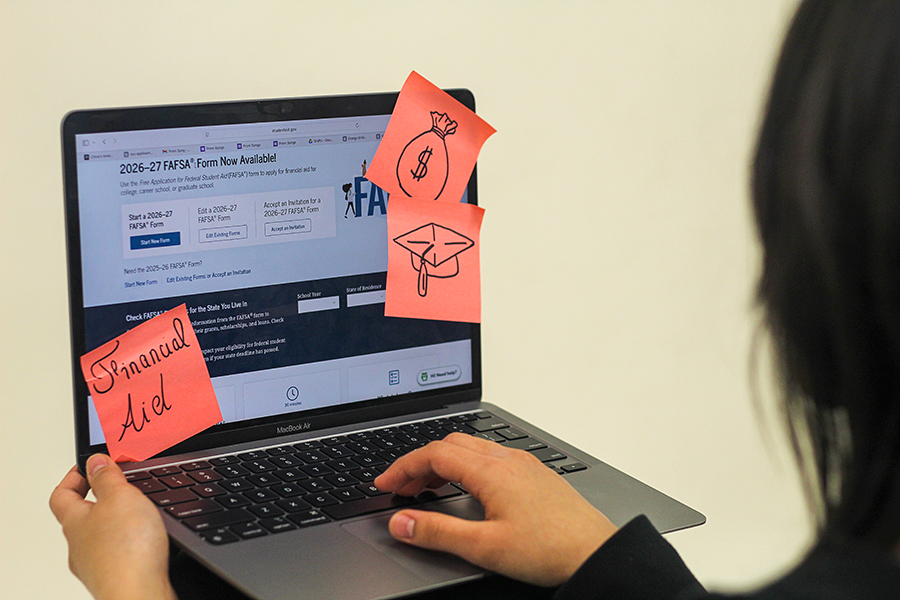
These changes directly impact the Free Application for Federal Student Aid (FAFSA), the form used nationwide to determine federal aid eligibility. In addition, the Texas Application for State Financial Aid (TAFSA) is also subject to these new changes. It deeply affects students who are not eligible for federal aid, and most importantly those with an immigrant background.
Senior Chimerie Ozor, who plans to pursue a higher degree in political science, questions the efficiency of FAFSA and its inability to provide financial coverage.
“I think it’s pretty inefficient,” Ozor said. “A lot of parents aren’t familiar with the system, therefore they’re reluctant. I live in a two-parent household, and my dad lives in Nigeria, but they made it as if it was a three parent household based on what the tax return said. The tax return isn’t really reflective of how people are living, but that’s what they go off of. And I don’t think anything good has come out of ‘The Big Beautiful Bill.’ I know it’s taken a lot of aid from a lot of students, and I don’t understand why a bill would be directed at taking things away from people that need it rather than giving stuff.”
Because public universities depend largely on state and federal funding, they are expected to be more affected than private institutions. According to college counselor Debbie Lewis, she has noticed an increasing amount of students reconsidering their school of choice and some have even chosen community colleges.
“My biggest concern is that this bill could hurt middle and lower income students the most,” Lewis said. “Public universities rely heavily on government funding, so if that support decreases, it could limit opportunities for grants and scholarships and make college less accessible.”
Students, especially seniors, are having difficulties adjusting to the new implemented bill. Some who expected aid weren’t even eligible for the Pell Grant.
“Having a single parent and being on free reduced lunch my entire life, I was expecting to get
aid, but I actually got $0,” Ozor said. “Going off of that, I’ve become more critical with where I’m choosing to go. It’s sad to say, but you have to lower your dreams because you can’t go everywhere, especially out of state schools. I need to be realistic because financial aid dictates where I go.”
AVID sponsor Lois Hardaway assists juniors and seniors with college preparation and says the paperwork process has become more stressful for families, especially students who are preparing for their futures.
“We help students complete the FAFSA and TASFA applications, but this year has been more stressful, especially for undocumented students,” Hardaway said. “Many families are worried about sharing their information, and some students have chosen not to apply because they’re unsure what will happen with their data.”
Despite the anxiety surrounding financial aid, Hardaway says students’ goals have not changed.
“The interest in college is still there,” Hardaway said. “Students are determined. Our job is to adapt to whatever laws are passed, keep families informed and make sure students come first.”