There was a black spot on the doorframe.
Valerie Wilhelm knew what that meant. She had seen it before, caused by residue on the fingertips of someone she loved, left by substances that had inflicted so much pain on her family.
Valerie walked in and found her youngest daughter unconscious, with blueish discoloration on her upper body and her muscles stiff as a rock.
Without thinking, Valerie sprung into action to unlock the front door and call 911.
In that four-and-a-half-minute call, the 911 dispatcher taught Valerie how to administer CPR so she could save Lillian Wilhelm from an overdose.
“I was screaming, ‘Lilli, what have you done?’” Valerie said.
Less than an hour before Lillian overdosed, Valerie was shopping for chicken noodle soup. Upon returning home, she sensed something was off.
“I had this gut feeling,” Valerie said. “She said she felt sick that morning. She had just gotten home from rehab, and she was supposed to be at her outpatient care that day.”
The overdose occurred because of fentanyl, however, because of Lillian also doing a “few bumps” of cocaine, her heart was able to continue beating long enough for the paramedics to arrive.
Lillian, 18, had struggled with methamphetamine addiction for two years, however, following this overdose, Valerie knew she had to make a change in her daughter’s recovery process.
Over the course of her addiction, Lillian misused multiple substances, including methamphetamine, opioids and fentanyl.

“I called her probation [officer], and I told them no more,” Valerie said. “No more sending her anywhere, y’all are not in charge. I’m strapping her to my hip. She needs to be loved, she needs to be validated.”
The overdose occurred following Lillian leaving rehab for the fourth time. She said after leaving rehab she wanted to live a sober life, but she still wanted to “get high.”
“I didn’t know who I was without it, and I didn’t wanna suffer the pain of my home stuff again without it,” Lillian said.
Lillian attended various drug misuse treatment programs in her recovery, which Valerie said had unsuccessful results.
“We tried rehab after rehab,” Valerie said. “None of that helped, and probation was only making it worse.”
According to Valerie, recovery began improving once Lillian was able to return home. Throughout the course of her recovery, the family focused on structure, open communication and helping Lillian reintegrate into daily life, including eventually returning to school.
Lillian said one reason she struggled to be successful during the rehabilitation process was because she missed the familiarity and comfort of being home with her family.
“When you’re at rehab all you want is your dog, your blanket, you want to be able to enjoy getting sober,” Lillian said.
Valerie said addiction was a problem the Wilhelm family struggled with long before Lillian used substances. Lillian was around 8 years old when her father died following a suicide in 2015. Valerie said it left the family grieving and emotionally vulnerable for years afterward.
Valerie said after losing her husband, she didn’t want to see the same happen to Lillian.
“When you have a husband that’s an addict, that’s completely different from a child,” Valerie said. “I’ve had both.”
Lillian said her struggles with substance use began at the end of eighth grade, when she was 14 years old.
One of the treatment centers Lillian attended was a residential program for adolescents. Lillian said the facility included a solitary confinement area called “the Unit,” which she described as a restrictive space used for patients the program deemed disorderly. She said it had boarded up windows, white walls and cots for beds. Lillian also recalled staff dressing in jeans or leggings and T-shirts.

“That test had been out on the shelves for 17 years,” Valerie said. “They called the next morning and said ‘Tell that kid she’s correct, the correct answer wasn’t provided.’” (Photo courtesy of Valerie Wilhelm)
Lillian described her experience as “very traumatic.”
Valerie said listening to her daughter long for opioids during recovery was not easy.
“One thing that was hard for me to hear her say she was ‘craving,’” Valerie said.
Because of Lillian’s unsuccessful recovery attempts, Valerie said she let Lillian make her own decisions for recovery while still keeping open communication between mother and daughter. Valerie said during recovery, she and Lillian made sure to be completely open with each other.
“I listened to what she needed, heard her and supported her decisions for recovery along the way,” Valerie said. “When she wanted to come off Suboxone (a medication for opioid use disorder), I let her make the decision.”
Valerie said the most painful part of Lillian’s recovery process was the inability to handle problems her children were facing.
“My motherhood was robbed,” Valerie said. “That’s what’s most painful to me about the last 10 years.”
Lillian said at one point in her life, she thought she never “would be OK with not wanting Percs.”
“If a Perc was in front of me today, I’d walk away,” Lillian said. “The moment I learned to understand drugs differently, I [was] free.”
Valerie said she believes Lillian’s experiences have given her purpose.
“It’s helped her define herself,” Valerie said. “Who she is, what she’s meant to become, it’s helped her focus on herself.”
Valerie said Lillian has always been kind, wanting to help everyone.
“She is a selfless human being,” Valerie said. “She will give and give and give before she does anything for herself. She’s always thinking of others.”
To better talk about her emotions during recovery, Valerie had Lillian paint seven to eight rocks, place them in a backpack and walk around with them.
Valerie said it was a good analogy to help people understand the importance of expressing your emotions.
“Walk around with that all daylong and tell me if you want to talk about it,” Valerie said. “That’s a good analogy to help people understand you should talk about it, because you’re helping yourself, your future and those around you.”
After Lillian returned from rehab for the fourth time, the house the Wilhelms were living in burned down. They lived in Airbnb for 17 months until they were able to move back in. Valerie then chose for Lillian to be homebound for her junior year of high school following her having a seizure on her first day.
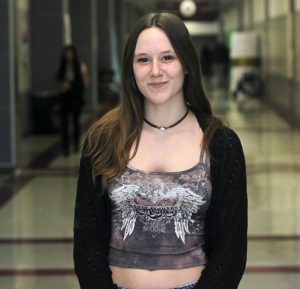
“We did that for a whole year,” Valerie said.
Lillian returned to school for her senior year at 17, after ending probation in the summer of 2025.
Valerie said she’s made sure to be there for Lillian along the way.
“It’s been hard for her to be that consistent,” Valerie said.
The image of the black spot on the doorframe stayed with Valerie, however now, she said it’s taken on a new meaning, one of growth, with more settled routines and a sense of calm that wasn’t there before.
Valerie said growth has come with a different approach to handling recovery, one centered less on control and more on patience and support during the process.
“Just letting her know there’s no right or wrong way to [do] this, don’t be hard on yourself, give yourself grace,” Valerie said.
This year was Lillian’s first full year back since the second semester of eighth grade.
“I was like ‘Holy moly, we made it,’” Valerie said.
According to Valerie, Lillian’s first day was “super exciting.” She added that being back in school has helped Lillian lean into her creativity.
“It makes me proud to see her rise to the occasion,” Valerie said.
Lillian was able to reintegrate with help from teacher Madeline Alfaro, who says she was able to help Lillian get a schedule that would help her be successful in school.
“At first, she was super bubbly and energetic to come back,” Alfaro said. “But she was nervous about what school was going to look like for her.”
Alfaro said she’s watched Lillian grow and prosper throughout this year.
“She wants to be at school every day,” Alfaro said. “Her grades are extremely important to her. She is looking forward to graduation and seeing that finish line.”
Alfaro said she has been able to help Lillian in handling new challenges during her time in school.
“I think coming back to school, she realized it’s OK if everything’s not perfect the first time,” Alfaro said. “She isn’t giving up, and she continues to try.”
While making Lillian’s schedule for the year, they decided to put her in the INCubatoredu program after Lillian mentioned her interest in entrepreneurship.
“[The class] gave her an opportunity to use her personality and passion for life for a greater purpose,” Alfaro said. “It gave her an opportunity to work with peers her age and come up with something she was passionate about.”
Alfaro has been impressed watching Lillian strive toward her goal.
“What she’s done in INCubatoredu has been really cool to see,” Alfaro said. “She is able to take a step back and say ‘I want to do something that’s going to help others in the same struggles I have had.’”
INCubatoredu teacher Nicole Franczvai said she first met Lillian when she and Valerie met with Alfaro to discuss classes for the year.
“She had all the passion and this massive complex idea,” Franczvai said about Lillian’s business idea. “It was everything from addiction recovery to counseling.”
Lillian’s plan is to create an in-home rehabilitation program called The Route. The service would work specifically with teens in their homes to support recovery from substance use. It aims to address rehabilitation by having professionals collaborate directly with each patient and their family to build individualized recovery plans based on personal needs and circumstances. The program will launch with a small test group of one to three families, with therapists working together to schedule visits and develop structured plans for each patient. Lillian would contract various experts, such as therapists and nutritionists, who would coordinate care and provide ongoing in-home support throughout the recovery process.
“The program would teach them to live a healthy life,” Lillian said.
Lillian explained her belief that recovery needs to be centered on addressing “the roots of the problem.”
Lillian said the initial idea came to her at 1 a.m., and she “couldn’t forget” it, saying she “had to write it down in her notes.”
Lillian said she wants to help other teens with substance use disorder because of the “roadblocks” she faced in her experience.
“Kids are making mistakes they don’t quite understand,” Lillian said. “They’re just kids growing up, and they’re doing it for reasons of pain.”
Lillian said after her firsthand experience with opioid misuse, she believes her idea feels achievable.

“This has a lot of potential,” Lillian said. “It’s very sad that fentanyl is trending, but it could make millions.”
Lillian wants The Route to prepare individuals for reintegrating into the world after recovery.
“Learning about foods, learning how to grocery shop, how to clean, all those kinds of things that’s not really taught to kids that are struggling with addiction,” Lillian said.
Lillian said she plans to wait two to three years before initially launching, but she wants to lay the foundations and begin funding now, estimating a $25,000 initial cost.
Valerie said she’s glad Lillian has been able to use her “creative spirit” in her plans and wants the best for her daughter.
May 6, 2026 marked Lillian’s two years sober. Valerie said she’s proud of her daughter and the growth she’s undergone.
“We’re grateful we’re having these kinds of mornings versus the other mornings where she wouldn’t get up for school or where she was overdosed and incapable of going,” Valerie said. “That’s a thing we’ve learned, pain lets you know you’re alive, and it can’t always be great, otherwise you can’t appreciate the great days.”
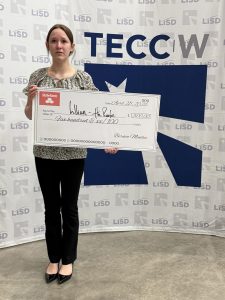
Lillian chose to opt out of INCubatoredu’s final pitch, instead participating in the elevator pitch, a 30 to 60-second conversational summary of her business. Lillian was awarded $500 at Technology, Exploration & Career Center West for winning the audience choice award.
“I just wanted to push myself to do something,” Lillian said about her decision to participate in the elevator pitch. “I can’t let The Route stray away from me.”
Lillian was accepted for Texas A&M’s elevator pitch contest on May 19. The contest only accepts 80 people, with each person being allotted five minutes, with suggested pitch times between one to three minutes.
“It’s a hard competition to get into,” Franczvai said. “They said they had double the applicant pool of last year’s, so I’m really proud of her for getting accepted.”
Lillian said she chose not to attend because she wants to develop her idea more.
“It’s not that I can’t do it,” Lillian said. “I just think I need to start developing The Route more.”
According to Lillian, she wants to make The Route into a nonprofit organization.
She is set to attend graduation next Saturday, May 30.
Lillian said even though she didn’t attend the A&M Pitch, she’s proud of her acceptance because it reminds her how far she’s come.
“I was in shock because this time two years ago, I was in jail,” Lillian said. “Now I’ll be two years sober.”